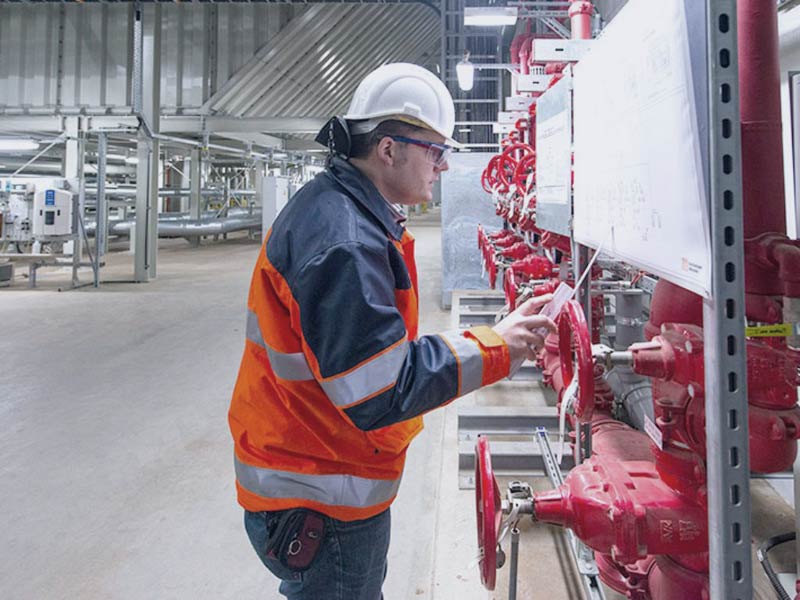
Buildings need to be designed to offer an acceptable level of fire safety and minimise the risks from heat and smoke. The primary objective is to reduce to within acceptable limits the potential for death or injury to the occupants of a building and others who may become involved, such as the fire and rescue service. Also crucial are protecting contents and ensuring that as much as possible of a building can continue to function after a fire - and that it can be repaired. The risk to adjoining properties also needs to be considered, as well as possible environmental pollution.
All components of modern fire-protection systems need to work together to effectively detect, contain, control, and/or extinguish a fire in its early stages - and to survive during the fire. To achieve the most beneficial symbiosis between these components, it’s best to involve an experienced system designer, such as a fire-protection engineer, in the early stages of the planning and design process.
Code compliance is the first objective in fire fighting design. Codes are legal minimum requirements, we at Big Tree Design Team always provide solutions that really meet with the minimum requirements mentioned by the existing rules and standards.
Beyond the components that actually make up an integrated fire-protection system, there’s maintenance which is another important factor that affects design. An improperly maintained system lacks reliability and, therefore, true protection. If a system is not maintained properly, its reliability degrades rapidly. Don’t install a system that you can’t routinely maintain and test easily and effectively. Big Tree Design Team offers affordable package with assured quality to install and maintain fire safety systems at your home as well as commercial space.